












By Doreen Asasira
OPINION
Efforts to empower the girl child have played a transformative role in addressing long-standing gender inequalities. Across many societies, including Uganda, these initiatives have improved access to education, strengthened women’s economic participation, and elevated the status of women in both public and private life. However, as these gains continue, a growing conversation is emerging: what happens when empowerment is pursued in a way that unintentionally sidelines boys?
An approach that focuses exclusively on one gender, even with the best intentions, risks creating new social imbalances. True equality is not a zero-sum game, it requires that both boys and girls are equipped with the skills, support systems, and opportunities they need to thrive together.
One of the most pressing concerns is the vulnerability of boys who grow up without adequate mentorship or guidance. When boys feel overlooked or unsupported, they may struggle with low self-esteem and identity confusion. In such situations, some turn to harmful coping mechanisms such as substance abuse, crime, or violence. This is not an inherent trait but often a reflection of unmet emotional and social needs. Just as girls benefit from structured mentorship programs, boys equally require safe spaces, positive role models, and intentional guidance.
The ripple effects of this imbalance can extend into relationships. When empowerment efforts elevate one group without corresponding growth in the other, it may create disconnects in expectations, communication, and shared values. For instance, highly empowered women economically independent and socially aware may find it difficult to relate to men who have not received similar psychosocial nurturing. This mismatch can strain relationships and, in some cases, contribute to increased risks of gender-based violence, not because empowerment is wrong, but because it has not been applied holistically.
Mental health is another critical dimension. Boys and men often face intense societal pressure to conform to rigid notions of masculinity endurance, emotional suppression, and dominance. These expectations leave little room for vulnerability or help-seeking behavior. As a result, men tend to experience higher rates of suicide and untreated depression in many parts of the world. Ignoring boys in empowerment conversations perpetuates this silent crisis. A balanced approach would normalize emotional expression for all genders and promote mental well-being as a shared priority.
At the same time, modern empowerment movements are also reshaping how societies understand gender and identity. By challenging restrictive gender norms, these initiatives create environments where individuals feel safer expressing themselves authentically. This has coincided with increased visibility and acceptance of diverse sexual orientations and identities, particularly among younger generations. While some view this as a cultural shift toward greater openness, others interpret it as a complex interplay between social acceptance and identity exploration.
What remains clear is that empowerment when inclusive fosters a society that is more tolerant, emotionally intelligent, and adaptable. Studies have shown that societies with higher levels of gender equality tend to demonstrate more positive attitudes toward diversity, including acceptance of LGBTQ+ individuals. This suggests that dismantling rigid power structures benefits not just women, but society as a whole.
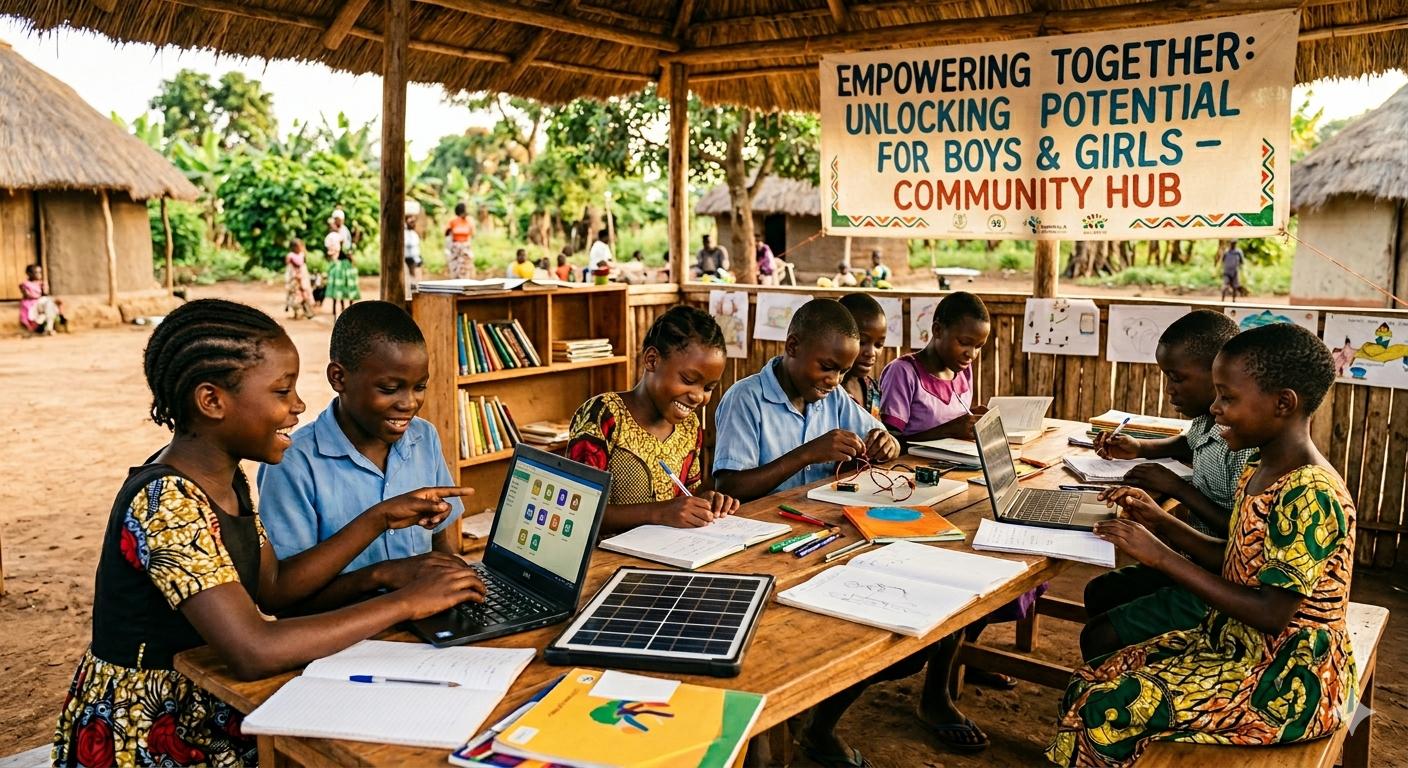
However, inclusion must be intentional. Empowerment should not evolve into competition between genders, but rather into collaboration. Boys should not be positioned as obstacles to progress, nor should girls’ advancement be slowed in the name of balance. Instead, both should be supported simultaneously, recognizing that their development is interconnected.
Practical steps toward inclusive empowerment include integrating boys into mentorship programs, promoting positive masculinity, investing in mental health resources, and encouraging dialogue that bridges gender divides rather than deepening them. Education systems, community organizations, and policymakers all have a role to play in ensuring that empowerment frameworks are comprehensive and equitable.
Ultimately, a harmonious society is built not by elevating one group above another, but by lifting everyone together. Empowering girls remains essential but it must go hand in hand with empowering boys. Only then can we achieve a future defined not by imbalance, but by mutual respect, shared opportunity, and collective progress.