













By Leonard Kamugisha Akida
KAMPALA
Uganda and South Sudan have signed a memorandum of understanding (MoU) to strengthen trade and address delays, multiple checkpoints and other barriers affecting cross-border business.
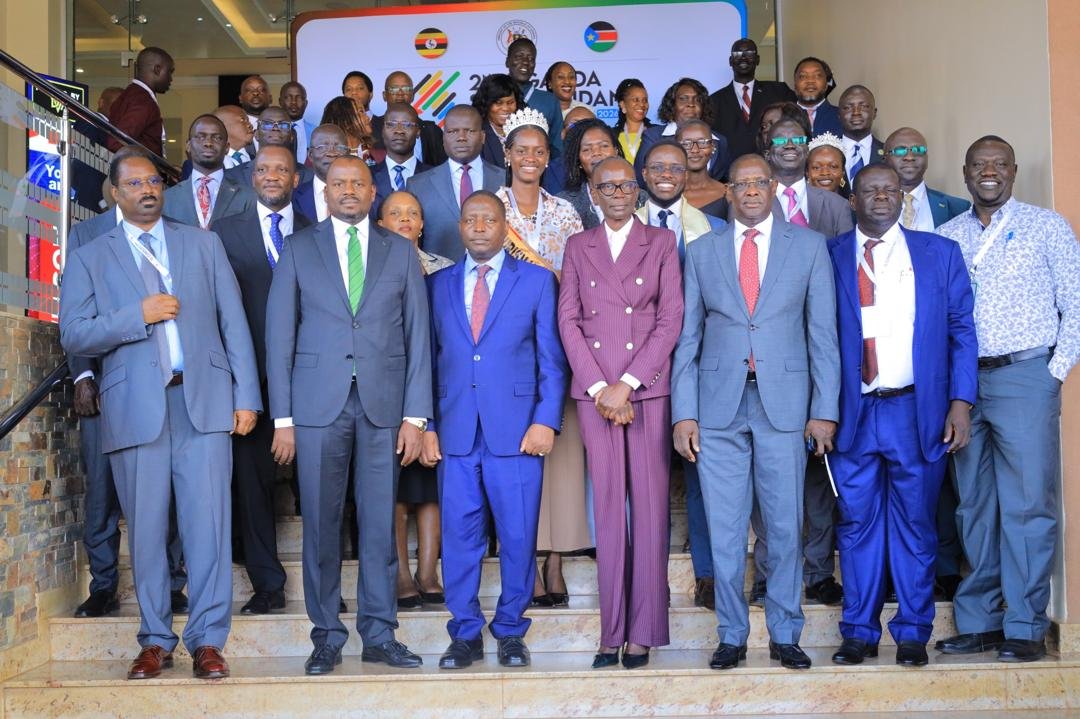
The agreement was signed on Wednesday during the second Uganda-South Sudan Business Forum and Exhibition at Mestil Hotel in Kampala.
Uganda’s Minister of State for Industry David Bahati and South Sudan’s Minister of Trade and Industry Dr Labanya Margaret Mathya signed the deal, which provides for joint technical committees to oversee implementation, facilitate investment and promote information exchange.
Uganda’s Ambassador to South Sudan, Brig. Gen. Ronnie Balya, said the committees would be supported by a joint communique, a roadmap with timelines and measurable outcomes, and regular review meetings to ensure commitments are fulfilled.
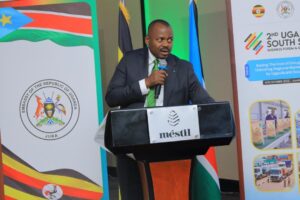
“We should judge the success of the MoU not by the signing ceremony alone,” Bahati said, adding that its impact would be measured by trade barriers resolved, investments realised, businesses established and jobs created.
He said Ugandan traders and transporters continued to face delays associated with South Sudan’s electronic permit system, repeated cargo verification, unofficial charges and inconsistent clearance procedures along the Kampala-Gulu-Nimule-Juba corridor.
Bahati called for an urgent review of the permit system to improve transparency, eliminate duplicate assessments and payments, clarify charges and establish mechanisms for resolving disputes.
He also said the one-stop border post at Elegu, built by Uganda, could not deliver its full benefits without complementary facilities and coordinated operations at Nimule in South Sudan.
Bahati said Uganda exports goods worth about $524m to South Sudan annually, compared with imports of about $22m, urging the two countries to strengthen production and trade in locally manufactured goods.
He proposed cooperation in steel production, noting that Uganda spends about $1b annually importing steel despite both countries having substantial iron ore deposits.
Mathya said Uganda remained one of South Sudan’s priority trading partners and a major source of goods for her country.
She said a high-level committee established by President Salva Kiir was working to eliminate non-tariff barriers. She added that alien registration had been abolished and hurdles related to visa payments removed, although foreigners working in South Sudan still required work permits.
“South Sudan welcomes all investors of every kind,” Mathya said, reaffirming her government’s commitment to continued trade between the two countries.
However, South Sudan’s Ambassador to Uganda, Paul Malong Akaro, said traders from his country faced difficulties accessing Ugandan manufacturers and distributors directly.
He also urged the Uganda National Bureau of Standards and the South Sudan Bureau of Standards to address challenges affecting South Sudanese exporters of dried fish transiting Uganda to the Democratic Republic of the Congo.
Minister of State for Foreign Affairs in charge of Regional Cooperation Haruna Kasolo Kyeyune said the agreement’s value would depend on implementation.
“The significance of the MoU will ultimately depend on its implementation,” Kasolo said, urging government agencies to coordinate and keep the private sector involved.
The forum, held under the theme “Easing the Cost of Doing Business and Unlocking Regional Market Opportunities for Uganda and South Sudan”, follows the inaugural meeting in Juba in July 2022.
Uganda and South Sudan are members of the East African Community and the Intergovernmental Authority on Development. South Sudan gained independence in 2011 and joined the EAC in 2016.