










By Leonard Kamugisha Akida,
KAMPALA
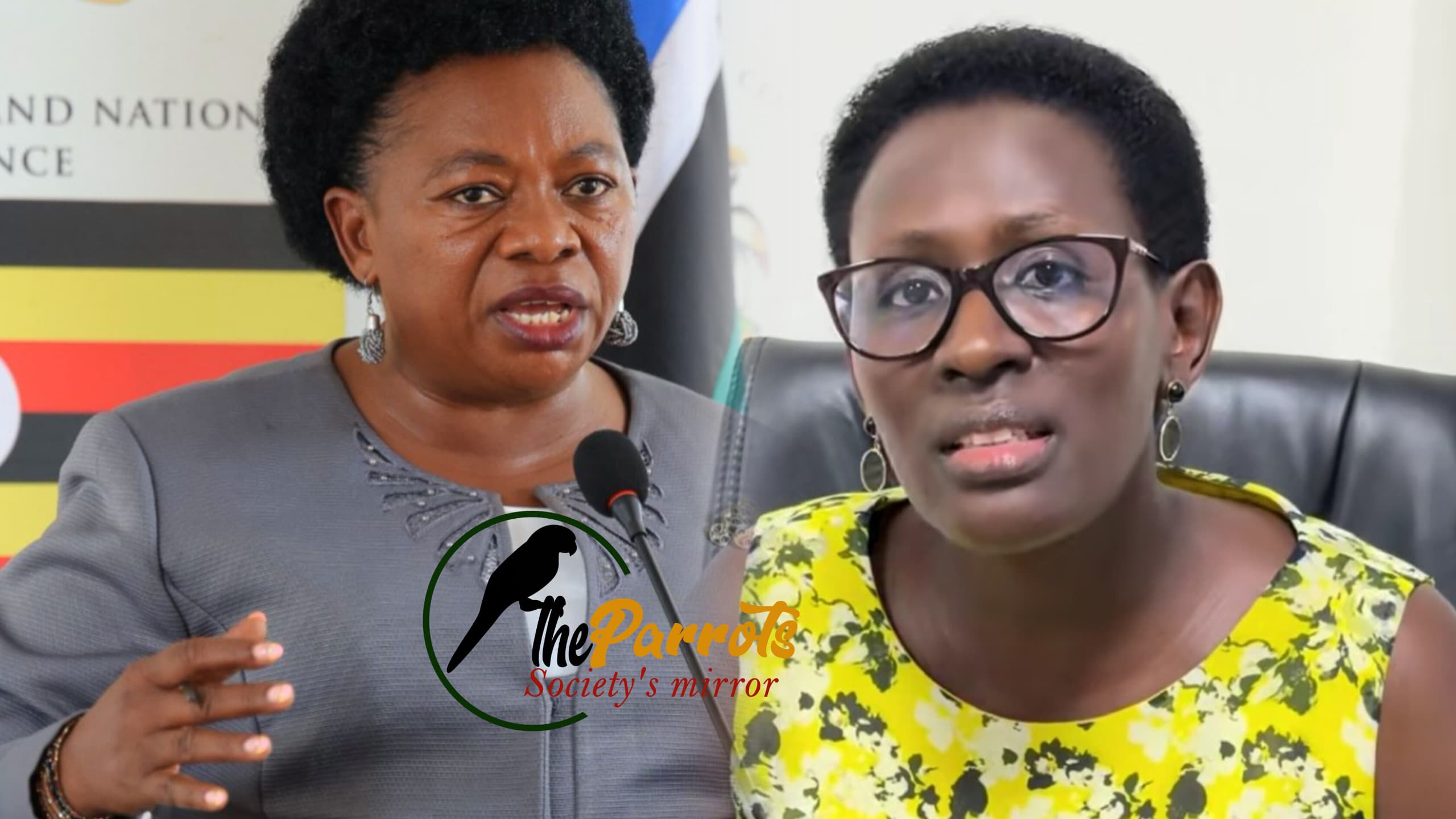
The State Minister for Lands, Harriet Ntabazi, has dismissed claims that the Ministry of Lands’ constitutional authority has been undermined by the proliferation of land-related units under State House and other government agencies, insisting that the center of authority over land matters begins and ends with the line ministry.
The development follows growing public concern over the fragmentation of land administration, where multiple ad-hoc units under State House have reportedly been overriding the ministry’s mandate, exacerbating bureaucratic confusion and fueling rampant land disputes.
Speaking during the launch of the Comprehensive Government Land Inventory (GLI) at the Uganda Media Centre on Friday, Minister Ntabazi, said that all institutions derive their roles from and work alongside the ministry.
“It is very important for Ugandans to know that the Ministry of Land, Housing and Urban Development in Uganda is one. We don’t have two ministries of land to say that one is situated where and another one where,” a tough-talking Ntabazi said.
She was responding to questions regarding the operational friction between the ministry and entities like the Presidential Taskforce on Land Matters and Environment in Uganda (State House Land Protection Unit) headed by Brig. Gen. Moses Lukyamuzi, and the office of Phionah Barungi, the Senior Presidential Assistant on Special Duties. Barungi has recently been under the spotlight, particularly using social media platforms like Tik Tok for mediating high-profile land disputes and investigating land grabbing, a role critics say directly replicates the ministry’s statutory duties.
The minister reasserted the ministry’s supreme constitutional authority, warning that overlapping interventions by “parallel” land units will no longer be tolerated.
She revealed that she has summoned a meeting involving all government institutions involved in land administration and other land actors including the Uganda Land Commission (ULC), the State House Anti-Corruption Unit, and the State House Investor Protection Unit, to harmonise their operations, draw a definitive line on their boundaries and eliminate duplication.
“I have already invited all these stakeholders… We sit down and see how we work together. All this confusion will stop!” Barungi disclosed.
“The other organs which have been put in place are only to supplement the ministry. There is no way we shall have overlapping mandates.”
Taking a swipe at senior presidential advisors claiming broad jurisdiction over land matters under the guise of “general or special duties,” Ntabazi, herself a former presidential advisor, said such vague mandates do not legally exist to handle land disputes.
“You cannot stop social media to work, neither will you stop TikTokers to talk, to create content. You’ll not stop bloggers to blog. Neither will you stop tweeters to tweet. Everybody and the writers of media, all of the houses, to write. Let them write, but the centre of authority of the Minister of Lands is the ministry,” the minister asserted.
“General duties don’t exist. Unless there is an instrument of power stating you are a presidential advisor on land matters, you must work under the Minister of Lands. Constitutionally, it is the Minister of Lands that is mandated. That is why you see other rulings [by parallel units] are bouncing back.”
Amidst the turf wars, the government officially announced the commencement of the Comprehensive Government Land Inventory, a massive nationwide program designed to identify, verify, survey, document, and digitize all government-owned land.
According to the Uganda Land Commission, only 23% of government land is currently registered, while nearly 70% of all land in Uganda remains undocumented, leaving it highly vulnerable to land grabbers, syndicates, and fraudulent titling.
The Commission’s secretary Andrew Nyumba said the government would adopt a whole-of-government approach to resolve land disputes, especially those involving public land.
“This exercise (GLI) will reduce illegal encroachment on government land, land fraud, and corruption in Uganda,” Nyumba noted.
Minister Ntabazi defused anxieties regarding potential land grabbing by the state, clarifying that the audit is strictly defensive.
“This initiative represents a major governance reform. It is not simply about issuing land titles; it’s about creating a complete, accurate, and reliable national database. The exercise is solely to identify and protect land that already belongs to the government or is held in trust for the people of Uganda,” she said, emphasizing that it will not touch titled private property or involve compulsory acquisitions.
She appealed to the public and stakeholders including local governments, traditional and cultural institutions to support the exercise, saying safeguarding government land is a shared national responsibility.