












KAMPALA
The Uganda Human Rights Commission (UHRC) has warned that the rise of Artificial Intelligence (AI) and “deep fakes” outpaces human and technical detection and verification of information something which poses a significant threat to national stability and public trust.
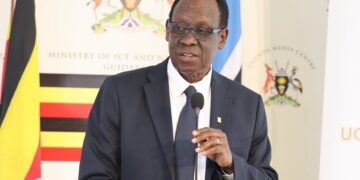
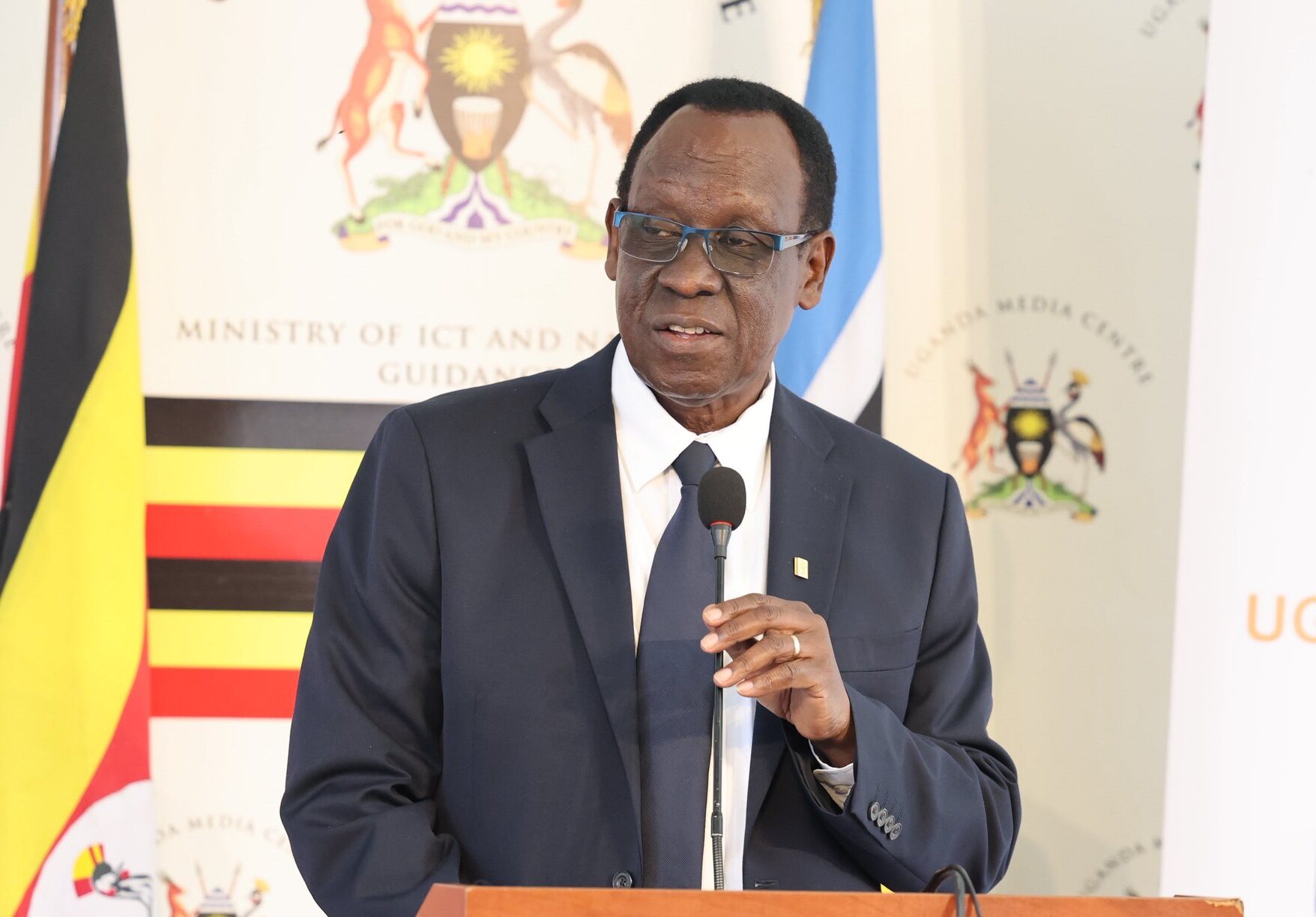
Lamex Omara Apitta, the Commissioner at UHRC says digital fog” created by these technological tools places the media at a crossroads where professional ethics are no longer just a standard, but a safeguard against national instability. He challenged the media to prioritise responsible reporting, accuracy and credibility, warning that failure to do so could fuel misinformation and trigger avoidable conflict in society.

“In this era of artificial intelligence, where deep fakes can be difficult to distinguish from facts or realities on the ground, the media industry has an even greater responsibility to rebuild trust, credibility, and accountability through fact-checking in order to avoid bias and misinformation that could lead to unnecessary conflict in society,” he said.
Omara was representing the Commission Chairperson, Mariam Wangadya at the joint press conference in collaboration with the Uganda Media Sector Working Group (UMSWG) at Uganda Media Centre on Tuesday ahead of the World Press Freedom Day on May 3.
Furthermore, the commission acknowledged that individuals within politics and law enforcement frequently overstep legal boundaries to limit press liberty.
“We have had instances where individuals within law enforcement have limited this freedom beyond what is provided for within our legal frameworks,” he said, calling for respect for press freedom in the country.
Media practitioners have also been urged to use available conflict resolution mechanisms and reporting channels to receive redress.
Journalist Alex B Atuhaire, a member of the Editor’s Guild said free and safe journalism contributes to sustainable conflict prevention, informed public debate, social cohesion and democratic governance, urging the government and other stakeholders to uphold press freedom and promote rights of journalists.
“Creating public awareness about press freedom and reaffirm this freedom is an essential foundation of peace, development and security in Uganda,” he said.
He highlighted some of the challenges facing freedom of the press as physical and digital attacks on journalists, gender-based threats, journalists’ welfare, and underpayment among others.
In Uganda, the 2026 WPFD is celebrated under the theme: “Shaping a Future Peace: Promoting Press Freedom for Development and Security in Uganda.”
The chairperson of the Media Council of Uganda, Paulo Ekochu, said this year’s theme is a reminder of the critical role played by the media in national development rather than a threat.
“A free press is not a threat to security. It is the bedrock of it. When journalists can report without fear, human rights are exposed, development is tracked and conflicts are prevented,” Ekochu said.
“As we prepare for the World Press Freedom Day, on May 3rd, let us reaffirm that shielding journalists means safeguarding our shared peaceful future.”
World Press Freedom Day is officially commemorated on May 3rd, with several activities planned by the UHRC and its partners to highlight the role of the media in Uganda’s development. Among the activities include a public walk from the national broadcaster, UBC to Lugugo and back, one way of creating public awareness on press freedom.