

By Leonard Kamugisha Akida
KAMPALA
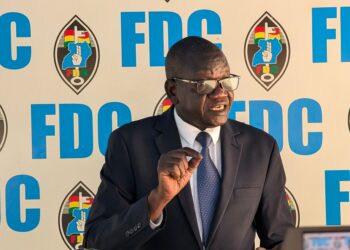
Forum for Democratic Change (FDC) Deputy President for Western Uganda Robert Centenary has called for the immediate repeal of the Protection of Sovereignty Act, 2026, arguing that the law has exposed Ugandans to economic hardships while failing to demonstrate tangible benefits to ordinary citizens.
Centenary said the Government should explain how the law, which was introduced to protect Uganda from external influence, has safeguarded citizens and promoted national development beyond what he described as its negative economic consequences.
“We told Ugandans that this law was not necessary, but the Government insisted that we are a sovereign state,” Centenary said.
He questioned the Government’s justification for the law, arguing that Uganda’s economic survival depends partly on international partnerships, trade, investment and remittances from Ugandans living abroad.
The Protection of Sovereignty Act was passed on May 5, 2026, before President Yoweri Museveni assented to it on May 17, 2026. The law commenced on May 22, 2026.
Speaking about the country’s economic challenges, Centenary said Uganda could not isolate itself from global developments and expect to achieve sustainable economic transformation.
He cited Museveni’s Independence Day remarks, in which the President reportedly attributed some of Uganda’s problems to developments outside the country, as evidence of the need to acknowledge the country’s dependence on the global economy.
“I was surprised on Independence Day when the President was lamenting that Uganda’s problems are the result of what is happening outside the country. Wasn’t he alive to the fact that Uganda is not operating in isolation?” Centenary asked.
He argued that Uganda’s exports, imports, investments and remittances are closely linked to developments beyond its borders, warning that restrictions affecting international partnerships could undermine economic activity and household incomes.
Centenary further claimed that the law was partly responsible for the economic hardships facing Ugandans, particularly through its alleged impact on remittances and access to international economic opportunities.
“The serious economic consequences we warned about have now come to pass because the Bill reduces remittances and is partly one of the causes of the economic hardships Ugandans are facing right now,” he said.
He, however, did not provide figures to quantify the alleged decline in remittances or establish the extent to which the law had contributed to the country’s economic difficulties.