










BUSHENYI
Uganda’s universities have been challenged to rethink their academic programmes and better align training with labour-market demands, as the country grapples with graduate unemployment and an evolving economy increasingly shaped by technology and innovation.
President Yoweri Museveni says some young people struggle to secure employment because they pursue academic programmes that do not sufficiently match the skills employers need, calling for more deliberate career guidance from universities, parents and guardians.
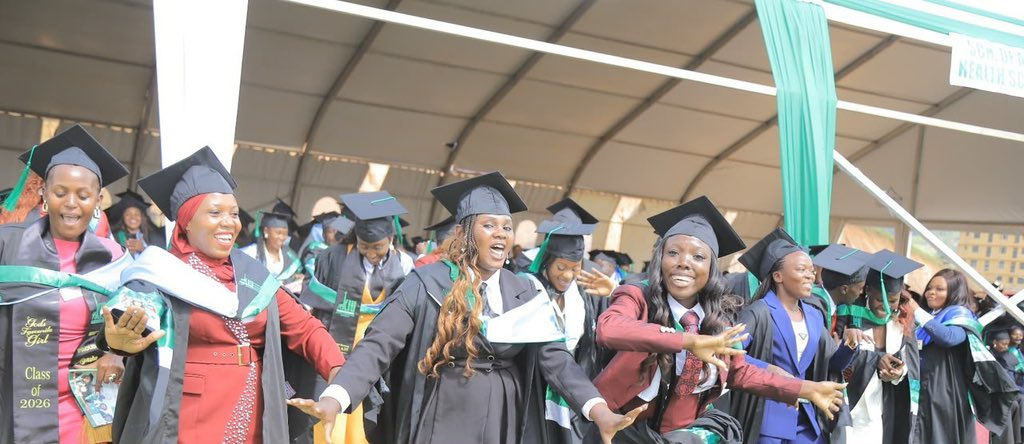
The President’s message was delivered by Vice President Jessica Alupo during Kampala International University.pala International University’s (KIU) 34th graduation ceremony held on Saturday at its Western Campus in Ishaka, Bushenyi District.
Museveni urged students to consider careers in science and technology, particularly emerging fields such as artificial intelligence, machine learning, data science and cybersecurity, where demand for specialised skills continues to grow.
He questioned why more students were not being encouraged to pursue science- and technology-related disciplines despite the opportunities emerging in these fields.
“The private sector is the biggest employer, and therefore university curricula must be tailored towards meeting its labour needs,” Alupo said, conveying the President’s message.
Museveni said universities should ensure their programmes equip graduates with relevant competencies that respond to the needs of the economy, while reaffirming government’s commitment to supporting higher education and developing skilled human resources for national transformation.
Financial Pressure On Students
The remarks reignite debate about the relevance of university education in Uganda, with growing calls for institutions to move beyond academic qualifications and strengthen practical skills, innovation, entrepreneurship and the ability of graduates to compete in an increasingly technology-driven labour market.
Beyond the celebrations, the graduation also exposed the financial difficulties facing students and families in accessing higher education.
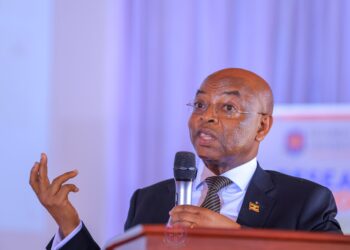
KIU Board of Trustees Chairman Alhajj Dr Hassan Basajjabalaba revealed that more than 1,000 eligible students were unable to participate in the graduation ceremony because they had not cleared their tuition fees.
He said the university had doubled its scholarship support from the usual 2,000 students to 4,000 this year in response to the economic hardships affecting families.
Basajjabalaba explained that the institution had introduced flexible payment arrangements to enable students to complete their studies, with some graduating after paying only part of their tuition, while others had not cleared their fees.
He said the arrangements were necessary to prevent financially constrained students from being denied the opportunity to complete their education.
The chairman attributed the pressure partly to difficult economic conditions, which have affected both household incomes and the cost of running educational institutions.
KIU Seeks Tax Relief On Seeks Tax Relief On Educational Equipment
Basajjabalaba also appealed to government to consider reducing or waiving taxes on imported educational equipment, laboratory materials and other essential university infrastructure.
He argued that the cost of importing equipment, coupled with taxation and transportation expenses, limits the resources universities can direct towards research, teaching facilities and student development.
To illustrate the burden, he cited an expenditure of approximately 800,000 US dollars on equipment for the university’s gymnasium and health club, saying the institution incurred about 780,000 dollars in taxes.
He said reducing the tax burden on essential imports could allow universities to redirect resources towards investments that directly benefit students, academic development and the wider public.
“If some of those taxes are waived, we could invest that money in something else that benefits our population,” he said.
The appeal comes amid wider discussions about the affordability of higher education, the sustainability of university operations and the investment needed to strengthen Uganda’s research, science and technology capacity.
3,091 Graduate At KIU
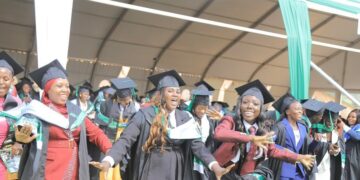
The ceremony saw 3,091 students graduate from Kampala International University, with awards ranging from bachelor’s degrees to doctoral qualifications.
Science-related programmes accounted for 55.7 per cent of the graduating class, while humanities and other disciplines represented 44.3 per cent, reflecting the university’s broad academic offering.
The ceremony, held under the theme “Transformation through Research, Innovation and Entrepreneurship,” brought together university leadership, government representatives, academic staff, parents, invited guests and graduands to celebrate academic achievement and reflect on the role of higher education in Uganda’s development.
The highly attended ceremony was hosted by Shawn Kimuli, who guided proceedings as graduands and guests marked the institution’s 34th graduation milestone.
The event celebrated the achievements of thousands of graduates while placing renewed focus on the responsibility of universities to produce competent, innovative and employable professionals.
As Uganda continues to pursue industrialisation, digital transformation and economic growth, the message emerging from the graduation was clear: the value of higher education will increasingly be measured not only by the qualifications it awards, but also by how effectively its graduates translate knowledge into skills, employment, innovation and solutions for society.