














By Doreen Asasira
Op_Ed
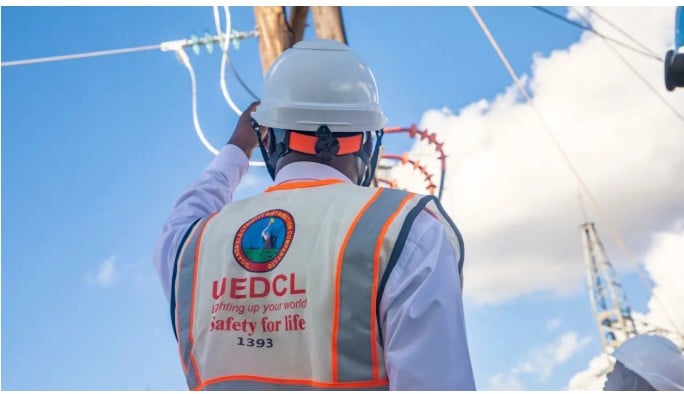
Uganda’s electricity sector is undergoing a significant transition. Following the end of UMEME’s concession, the Uganda Electricity Distribution Company Limited (UEDCL) assumed responsibility for electricity distribution with the promise of improving service delivery, strengthening public ownership, and ensuring that Ugandans receive greater value from the country’s growing investments in the energy sector.
With billions of shillings being invested in upgrading transmission and distribution infrastructure, public expectations are understandably high yet, for many consumers, those expectations have yet to be realised.
Across the country, households and businesses continue to experience planned power outages, occasional prolonged interruptions, voltage fluctuations, and uncertainty over electricity supply. At the same time, consumers are paying the Electricity Regulatory Authority’s (ERA) approved Q3 2026 retail tariffs, with the standard domestic tariff set at UGX 779.4 per kilowatt-hour for eligible domestic consumption. While the tariff includes measures such as the lifeline and cooking tariffs to cushion low-income households, electricity remains a significant expense for many families and small businesses.
This raises an important public policy question: Are Uganda’s growing investments in electricity infrastructure translating into better services for the people who pay for them?
This question is particularly relevant given the scale of investment currently underway. One of the flagship projects is the Greater Kampala Metropolitan Transmission System Improvement Project, financed through a concessional loan of approximately US$83.3 million from the Japan International Cooperation Agency (JICA). The project, which is nearing completion, is expected to strengthen the transmission network, reduce congestion, improve voltage stability, and enhance the reliability of electricity supply within the Greater Kampala Metropolitan Area. Electricity authorities have explained that many of the scheduled outages currently experienced by consumers are necessary to facilitate these upgrades.
These investments are commendable. Uganda cannot achieve industrialisation, expand digital connectivity, or support modern agriculture without a reliable electricity network. Expanding and strengthening the grid is therefore not only necessary but also indispensable for the country’s long-term development.
However, infrastructure investment alone does not constitute success. For consumers, success is not measured by the value of projects commissioned or the number of kilometres of transmission lines constructed. Success is measured by whether electricity is available when it is needed, whether businesses can operate without costly interruptions, whether children can study in the evening, and whether hospitals can provide uninterrupted healthcare.
In other words, consumers judge the electricity sector by the quality of service they receive. Unfortunately, this is where the accountability gap becomes apparent.
Despite the substantial investments being made, many consumers continue to report challenges that directly affect their livelihoods. Small businesses lose productive hours when electricity is interrupted. Restaurants, grain mills, welding workshops, salons and retail shops incur additional costs when they are forced to rely on generators or suspend operations. Farmers who increasingly depend on electricity for irrigation, milk cooling and value addition also bear the consequences of unreliable supply.
The financial burden does not stop there. Higher electricity costs inevitably affect the prices of goods and services, placing additional pressure on households already struggling with increasing living expenses. For many low-income families, electricity is no longer simply a utility bill; it has become a difficult budgeting decision that competes with food, school fees and healthcare.
This reality highlights a broader concern about affordability. While cost-reflective tariffs are intended to ensure that utilities recover the costs of generating, transmitting and distributing electricity, affordability remains an equally important public policy objective. Electricity is no longer a luxury. It is an essential service that enables economic participation, supports education, powers healthcare facilities and improves livelihoods.
A tariff that many consumers cannot comfortably afford risks limiting the productive use of electricity and slowing the very economic transformation that Uganda seeks to achieve.
Equally important is the issue of accountability. The transition from Umeme to UEDCL presented an opportunity to redefine electricity distribution in Uganda. Beyond changing the entity responsible for distribution, consumers expected improvements in customer care, quicker fault response, transparent billing, better communication during planned maintenance and more reliable electricity supply.
These expectations are entirely reasonable. Consumers who faithfully pay their electricity bills deserve to know how ongoing investments are improving service delivery. They deserve regular updates on network performance, reductions in outages, response times to faults and progress in expanding access to reliable electricity.
Transparency is essential to building public confidence.When infrastructure projects are financed through public resources and development partner support, citizens have a legitimate interest in understanding how these investments improve their daily lives. Publishing regular service performance indicators, communicating clearly about planned maintenance and demonstrating measurable improvements in reliability would strengthen trust between electricity providers and consumers.
The conversation is particularly important for communities hosting Uganda’s major energy infrastructure.
Across the country, communities have provided land for transmission lines, substations, hydropower facilities and other strategic energy projects. Others continue to bear the environmental and social impacts associated with large-scale energy developments. These communities should not merely witness electricity infrastructure passing through their villages; they should also experience the benefits through reliable, affordable and accessible electricity.
Uganda’s electricity sector therefore has an opportunity to demonstrate that public investment delivers public value.
This requires a stronger commitment to consumer-centred service delivery. UEDCL should continue investing in preventive maintenance, strengthening customer care systems, reducing restoration times following faults, improving communication with consumers and publishing regular reports that allow the public to assess performance.
Likewise, ERA should continue exercising robust oversight to ensure that tariff adjustments are accompanied by measurable improvements in service quality. Consumers should not only pay for electricity; they should receive dependable service that reflects the cost they bear.
Ugandans understand that infrastructure upgrades take time. They appreciate that planned maintenance is sometimes necessary to improve the network. What they reasonably expect is that these temporary inconveniences will lead to noticeable improvements in electricity reliability, operational efficiency and customer service.
As Uganda pursues its Vision 2040 aspirations and seeks to expand industrialisation, reliable electricity will remain one of the country’s most important development priorities. However, development cannot be measured solely by the amount invested in infrastructure. It must also be measured by the experiences of the people who depend on that infrastructure every day.
Closing the UEDCL accountability gap therefore requires more than upgrading substations and transmission lines. It requires strengthening transparency, improving customer service, enhancing operational efficiency and ensuring that every tariff paid by consumers translates into better, more reliable electricity services.
Only then will Uganda’s investments in the electricity sector truly power not only the national grid, but also the homes, businesses and aspirations of the people they are intended to serve.