












By Leonard Kamugisha Akida
NATIONAL
Uganda has registered a decline of about 4,000 new HIV infections, but adolescent girls and young women continue to bear a disproportionate burden of the epidemic, accounting for nearly four times as many infections as their male counterparts.
According to the 2025 national HIV estimates, Uganda recorded approximately 34,000 new infections in 2025, down from about 38,000 over a decade ago (since 2010). Young people aged 15 to 24 accounted for 38% (about 13,000) of the new infections, with young women contributing approximately 10,000.
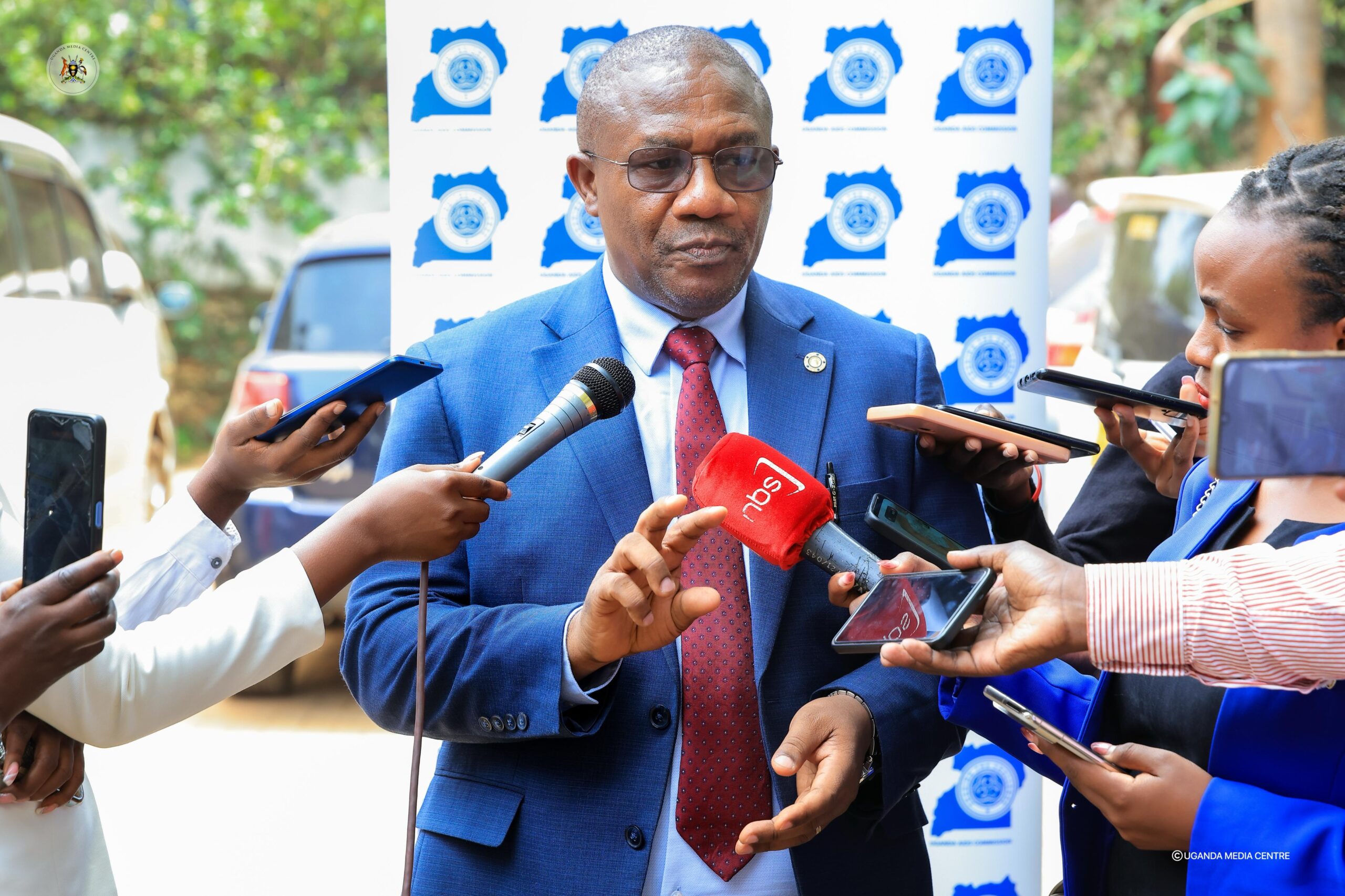
Tom Etii, the acting director general of the Uganda AIDS Commission (UAC), said the country had made significant progress in controlling HIV, with national prevalence declining from 18% in the 1980s to 5.9% currently.
However, he warned that the persistent infections among young women and high-prevalence urban areas threatened the country’s ambition to end AIDS as a public health threat by 2030.
Etii made the remarks while addressing journalists at the Uganda Media Centre on Tuesday, where he outlined progress and challenges in implementing sustainable interventions against HIV.
He said Uganda was approaching the global 95-95-95 targets, with 85.3% of people living with HIV aged 15 and above knowing their status, 99.1% of those diagnosed receiving treatment and 96.5% of those on treatment achieving viral suppression.
The figures, drawn from the 2025 Uganda Population-based HIV Impact Assessment (UPHIA), show that identifying people living with HIV remains the country’s biggest gap.
Dr Vincent Bagambe, the senior manager for policy, planning and strategic information at UAC, said the epidemic remained feminised, youthful and increasingly concentrated in urban areas.
He identified Fort Portal, Mbarara, Soroti and Lira cities among the urban areas reporting concerning HIV prevalence.

Bagambe also cited risky sexual behaviour, multiple sexual partnerships, inconsistent condom use and increasing sexual and gender-based violence as factors contributing to new infections.
Dr Robert Mutumba, the Ministry of Health’s AIDS Control Programme manager, said HIV prevalence among young people aged 15 to 24 stood at 1.5%, with girls more affected than boys.
He said the government was strengthening prevention through HIV testing, condom promotion, medical male circumcision, abstinence and faithfulness campaigns, as well as pre-exposure prophylaxis (PrEP).
The country is also expanding access to injectable PrEP, including cabotegravir, which provides protection through an injection administered every two months to people at substantial risk of infection.
Mutumba said about 8.5 million HIV tests were conducted during the financial year that ended in June 2026.
Meanwhile, AIDS-related deaths have declined by 66% since 2010 to approximately 19,000 annually, while mother-to-child transmissions have fallen by 78% to about 4,400 infections in 2025.
Etii said sustaining these gains would require stronger coordination among government institutions, health workers and communities.
The UAC announced that it would hold the 2026 National HIV and AIDS Symposium at Mbarara University of Science and Technology from November 16 to 18.
The symposium, under the theme Sustainable interventions to end AIDS as a public health threat by 2030, will feature a scientific meeting, financing dialogue, annual joint AIDS review and partnership forum.
The university’s Dean of Health Sciences, Dr Elias Kumbakumba, welcomed the decision to host the event, calling for research and evidence-based interventions to strengthen the national HIV response.