













NATIONAL
Cancer experts have warned that a shortage of specialised doctors and diagnostic services is undermining efforts to diagnose and treat oesophageal cancer in Uganda, with eight in every 10 patients seeking medical attention when the disease is too advanced for surgery.
Dr Wilberforce Kabweru, a senior consultant thoracic surgeon at Mulago National Referral Hospital, said only 20% of patients are diagnosed early enough to benefit from surgical removal of the tumour.
He attributed the trend to limited access to specialised medical services, inadequate diagnostic equipment and the high cost of investigations.
“Only about 20 per cent of patients present at a stage when the disease can still be treated by surgical resection. The majority, 80 per cent, present in late stages when surgery is no longer an option,” Kabweru said.
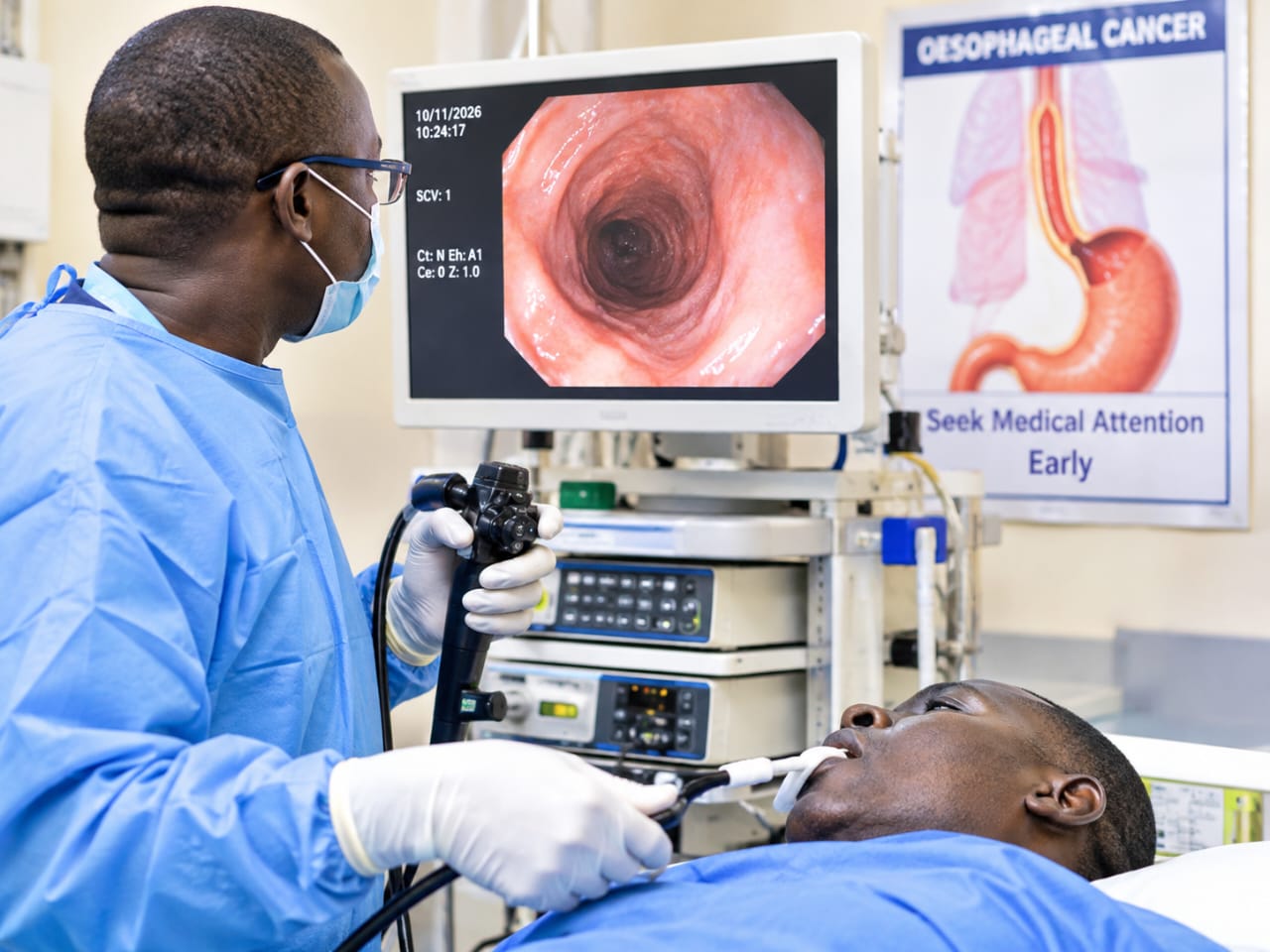
An endoscopy, one of the investigations used to examine the food pipe, costs between sh300,000 and more than sh1m in Kampala, further limiting access to timely diagnosis.
Kabweru also expressed concern over the disease affecting younger people, citing a case involving a 17-year-old patient.
He urged people experiencing persistent difficulty swallowing to seek medical attention rather than relying on soft foods and liquids to cope with the condition.
Oesophageal cancer affects the tube connecting the mouth to the stomach, progressively obstructing the passage of food and liquids.
On the other hand, Dr Joseph Okello Damoi, the head of surgery at Kyabirwa Surgical Centre, says patients whose food passage is blocked can benefit from oesophageal stenting.
According to the medic, the procedure involves inserting a small tube, known as a stent, to open the obstructed section and allow food to pass.
Damoi said restoring swallowing improves patients’ nutritional status and prepares them for further treatment, including chemotherapy and radiotherapy where appropriate.
Kyabirwa Surgical Centre treats about 100 oesophageal cancer patients annually.
He said misconceptions about biopsies, particularly fears that taking tissue samples spreads cancer, also contribute to treatment delays.
The International Agency for Research on Cancer reports that Uganda recorded an estimated 2,438 new cases in 2022, making oesophageal cancer the country’s fifth most common cancer.
Damoi advised the public to avoid smoking, excessive alcohol consumption and extremely hot beverages.