












By Ainembabazi Shallon,
OPINION
Uganda stands at a defining moment in its energy transition and its proposed Energy Efficiency and Conservation Bill is a timely and necessary intervention aimed at regulating energy consumption curbing waste and promoting sustainable cooking technologies. In a country where biomass remains the dominant source of household energy this law has the potential to transform not only how energy is used but also who benefits from it.
At its core, the bill recognizes a long-standing gap energy inefficiency is costing households degrading the environment by consistent deforestation and deepening inequality. By introducing measures to regulate energy use and promote efficient technologies the bill signals a shift toward sustainability and accountability. Importantly, it also acknowledges the urgent need to promote clean cooking solutions an initiative that directly affects millions of Ugandan women and girls.
Yet, one of the most critical issues the bill seeks to address is the absence of regulation in the clean cooking sector and as it stands no comprehensive regulations currently govern the manufacture, distribution and use of clean cooking technologies. This has led to a fragmented market where quality, safety and affordability are inconsistent leaving women and girls vulnerable to exploitation.
During the launch of Repower Uganda, Emmanuel Mulisa, the Capacity Building and Awareness Officer at the Clean Cooking Unit in the Ministry of Energy and Mineral Development (MEMD) announced that the government has finalized standards to govern clean energy use including briquette production. Under these new standards all operators will be required to obtain licenses. This is a commendable step toward formalizing the sector ensuring quality control and protecting consumers.
However, legislation alone will not deliver transformation. For this bill to truly succeed it must go beyond technical regulation and confront the lived realities of those most affected women.
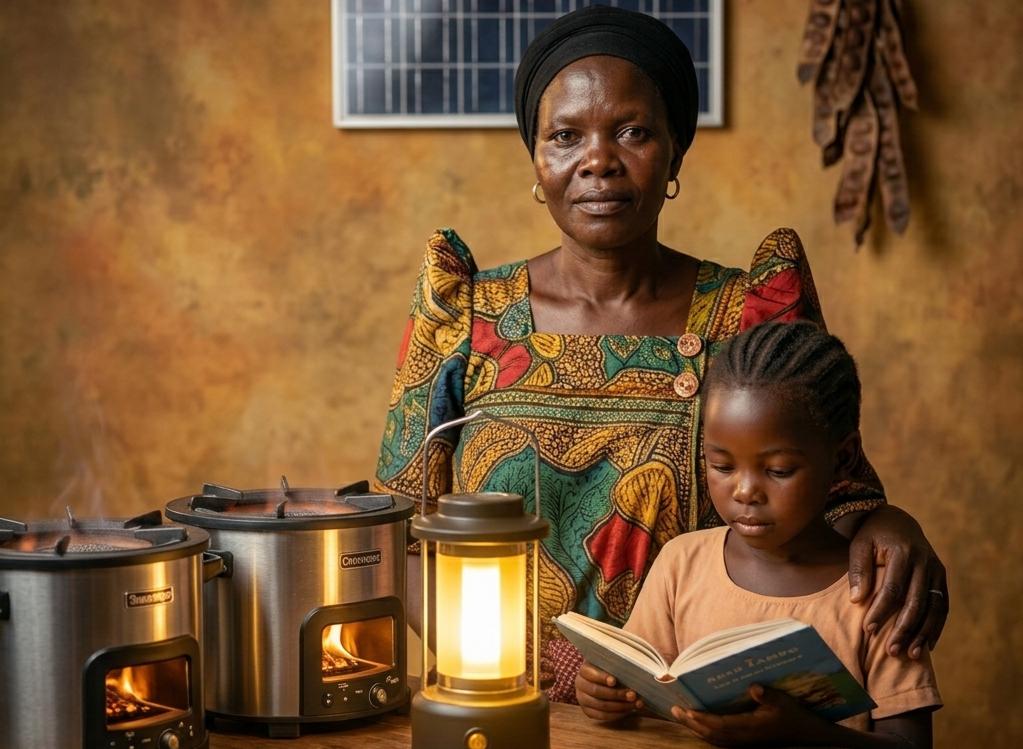
Women are not just passive consumers of energy they are central to its use management and impact at the household level. They spend hours collecting firewood are disproportionately exposed to indoor air pollution and bear the health and economic consequences of inefficient energy systems. Despite this they remain largely excluded from energy decision-making spaces.
An energy transition that ignores women is not only unjust it is ineffective. This is why the implementation of the Energy Efficiency and Conservation Bill must deliberately centre women. Their voices, experiences and solutions must inform policy design, rollout and monitoring. Women should not only be beneficiaries of clean energy initiatives but also leaders, entrepreneurs, and decision-makers within the energy sector.
Equally important is the need to decentralize renewable energy solutions. Uganda’s energy challenges are not uniform and centralized approaches often fail to reach rural and underserved communities. Decentralized renewable energy such as solar home systems, mini-grids, biogas plants and community-based clean cooking initiatives offers a more inclusive and adaptable pathway. These solutions can be tailored to local settings by reducing energy poverty and creating economic opportunities at the grassroots level particularly for women and youth.
Furthermore, investing in community awareness and capacity building is critical. The fact that standards for clean cooking technologies, including briquettes have now been finalized is encouraging but their impact will depend on how well communities understand and adopt them. This requires sustained education, accessible financing options and support systems that enable households to transition without undue burden.
The Energy Efficiency and Conservation Bill 2024 is more than a policy instrument it is an opportunity to redefine Uganda’s energy future. But that future must be inclusive, equitable, and responsive to those who have long been marginalized.
Women for Green Economy Movement Uganda (WOGEM)