











By Ainembabazi Shallon,
OPINION
The climate crisis continues to intensify manifesting in escalating and compounding impacts across all global regions and fossil fuels dependence being one of the major cause to the crisis. These consequences are fundamentally unevenly distributed exceedingly burdening rural areas and marginalised communities.
In Uganda, the frequency and severity of extreme weather events including heat waves, floods, drought, storms are accelerating at an alarming rate. Concurrently eustatic sea level rise poses an existential threat to entire communities. These environmental shocks have placed unprecedented stress on agricultural systems triggering widespread food insecurity and destabilizing hydrological cycles.
Uganda’s energy system remains heavily dependent on traditional biomass with firewood and charcoal accounting for about 87% of total energy consumption. This reliance has deep gender implications for most households where women and girls are responsible for collecting firewood and preparing meals. This unpaid care work consumes significant time and energy which goes unnoticed. Globally, an estimated 76 billion hours are spent daily on unpaid care work with women contributing 76% of this labor. In Uganda, this reality translates into lost opportunities girls missing school to gather firewood and women having limited time for income-generating activities and community participation.
The health consequences are equally alarming because cooking with firewood and charcoal in poorly ventilated kitchens exposes women and girls to harmful smoke leading to respiratory infections, eye problems and other long-term health conditions. Indoor air pollution remains one of the leading environmental health risks in Uganda yet it continues to be normalized as part of daily life.
Despite growing conversations around a just energy transition including the government’s push for electric boda bodas, buses and cleaner cooking technologies progress remains uneven. For example, while gas cylinders have been distributed in some communities many households cannot afford the cost of refilling them and off course without sustained subsidies, community sensitization and capacity building of such interventions risk becoming short-lived solutions rather than transformative change.
At the same time, Uganda continues to allocate significant financial resources of 17 billion shillings according to the minority report towards firewood, charcoal and gas consumption. However, redirecting a portion of these funds into locally led renewable energy initiatives could have far-reaching benefits especially for women and girls. Investments in solar energy, clean cooking technologies like briquettes, clean cooking stoves and community-based energy enterprises can reduce environmental degradation while creating jobs and improving livelihoods.
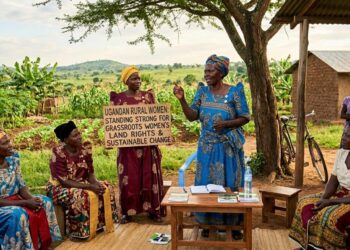
Women-led community organizations across Uganda are already demonstrating what effective climate action looks like for women and girls from restoring degraded ecosystems to promoting sustainable agriculture and clean energy solutions these groups are building resilience from the ground of which their efforts often remain underfunded and underrecognized.
A meaningful transition away from fossil fuel dependence must therefore center women and girls and this means more than simply including them as beneficiaries it requires actively involving them in decision-making, ownership and implementation of renewable energy projects. Energy systems must be designed to meet the real needs of communities, recognizing energy not just as a commodity but as a public good and a basic human right.
Ultimately, achieving a feminist just transition in Uganda requires addressing the structural inequalities that support energy poverty. This calls for investing in affordable and accessible renewable energy recognizing and redistributing unpaid care work and ensuring that women and girls have the knowledge, resources and power to lead.
Renewable energy initiatives should not only be seen as climate mitigation solutions but as local development solutions
The writer is a Programs Officer at Women for Green Economy Movement (WOGEM) Uganda